Ingredients
Metric weights use grams. US weights use ounces; liquids use fluid ounces. Conversions are rounded. Spoon measures use 5 ml teaspoons and 15 ml tablespoons; cups use 240 ml.
Serves 4
Choose any positive whole number of servings. Ingredients and measured amounts in steps scale together. Times, temperatures and equipment stay unchanged. For larger yields, cook separate original-size batches. Counted ingredients can become fractions; beat eggs before dividing them. Fixed correction-water checks remain fixed.
Rice
Pan
Sauce
Equipment
Kitchen scales; measuring jug and spoons; knife; cutting board; mixing bowls; saucepan with lid; sieve; heavy frying pan; spatula; food thermometer; heatproof spoon; spatula.
Check all product labels and cross-contact. Diet groups describe this listed draft, not every substitution.
Steps
Rice · About 15 min
- Rinse rice from 300 g short-grain rice, 420 ml water, drain, add measured water and simmer covered 15 minutes. Rest covered 10 minutes.
Toppings · About 9 min
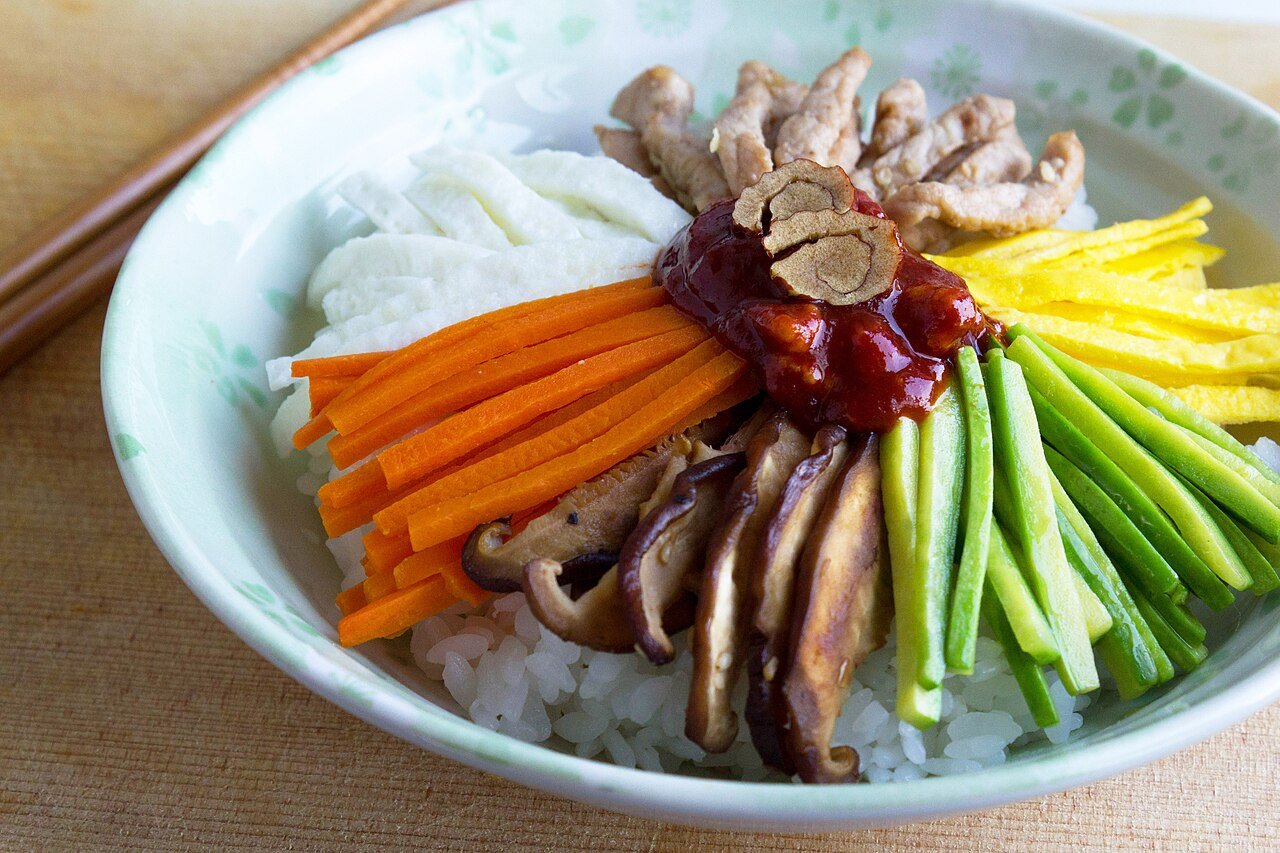
- Use oil from 25 ml neutral oil, 300 g minced beef, 200 g carrots, shredded, 200 g zucchini, sliced, 200 g spinach, 20 ml soy sauce to fry vegetables separately for 2–4 minutes each. Fry beef with soy sauce for 7–9 minutes until 71°C / 160°F.
Check: Look for this result: 71°C / 160°F.
Serve · About 8 min
- Mix 40 g gochujang, 15 ml sesame oil, 15 ml rice vinegar, 10 g sugar. Arrange rice and toppings in bowls; add sauce and mix at the table.
Tips
- Cook vegetables separately to retain their textures.
- Use the texture and doneness checks in the method; cooking times depend on your pan and heat.
Substitutions
- Use crumbled firm tofu instead of beef.
Storage
- Cool in shallow portions and refrigerate promptly, ideally within one hour. Keep at 4°C / 40°F or below and use within 24 hours.
- Reheat cooked rice only once, until steaming hot throughout at 74°C / 165°F. Keep cold rice dishes refrigerated until serving.
Make ahead
- Prepare the measured ingredients for Bibimbap one day ahead. Refrigerate chopped vegetables and other perishable ingredients separately; complete the staged cooking on the serving day.
FAQ
What matters most when making Bibimbap?
Cook vegetables separately to retain their textures.
What can I substitute in Bibimbap?
Use crumbled firm tofu instead of beef.
Can I prepare Bibimbap ahead?
Prepare the measured ingredients for Bibimbap one day ahead. Refrigerate chopped vegetables and other perishable ingredients separately; complete the staged cooking on the serving day.
Food safety references
FoodSafety.gov: cooking temperatures · Food Standards Agency: rice storage and reheating