Ingredients
Metric weights use grams. US weights use ounces; liquids use fluid ounces. Conversions are rounded. Spoon measures use 5 ml teaspoons and 15 ml tablespoons; cups use 240 ml.
Serves 2
Choose any positive whole number of servings. Ingredients and measured amounts in steps scale together. Times, temperatures and equipment stay unchanged. For larger yields, cook separate original-size batches. Counted ingredients can become fractions; beat eggs before dividing them. Fixed correction-water checks remain fixed.
Main ingredients
Seasoning and finishing
Liquids
Equipment
Sieve; bowl; wide frying pan with lid; slotted spoon; spatula.
Check all product labels and cross-contact. Diet groups describe this listed draft, not every substitution.
Steps
Soften the poha · About 5 min
- Rinse 360 ml medium or thick poha briefly under cold running water.
- Drain the poha in the sieve for 5 minutes.
Check: A flake should crush easily between your fingers without becoming paste.
- If the flakes remain hard, sprinkle a little water from 2 tbsp water, only if the softened poha seems dry over them.
Fry the peanuts and seasonings · About 5 min
- Heat 1 ½ tbsp neutral oil in the pan over medium heat.
- Add 3 tbsp peanuts.
- Stir for 3–4 minutes.
Check: The peanuts should smell toasted and have lightly browned skins.
- Lift the peanuts into a bowl with the slotted spoon.
- Add ¾ tsp mustard seeds and ¾ tsp cumin seeds to the oil.
- Cook for 30–60 seconds.
Check: The mustard seeds should pop; the cumin should darken slightly.
- Add 2 green chilies, chopped, 1 sprig curry leaves and 1 pinch asafoetida (hing) carefully.
Check: The curry leaves can splutter in hot oil.
- Stir for 20 seconds.
- Add 1 medium onion, chopped.
- Cook for 4–5 minutes, stirring frequently.
Check: The onion should soften and become translucent.
Warm and finish · About 3 min
- Add ¼ tsp turmeric and ⅓ tsp salt, adjust to taste.
- If using sugar, add ½ tsp sugar, optional.
- Fold in the softened poha.
- Cover the pan.
- Cook over the lowest heat for 2–3 minutes.
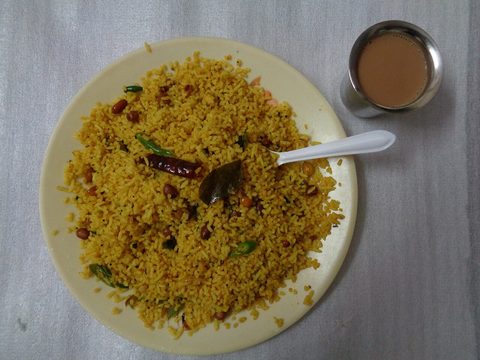
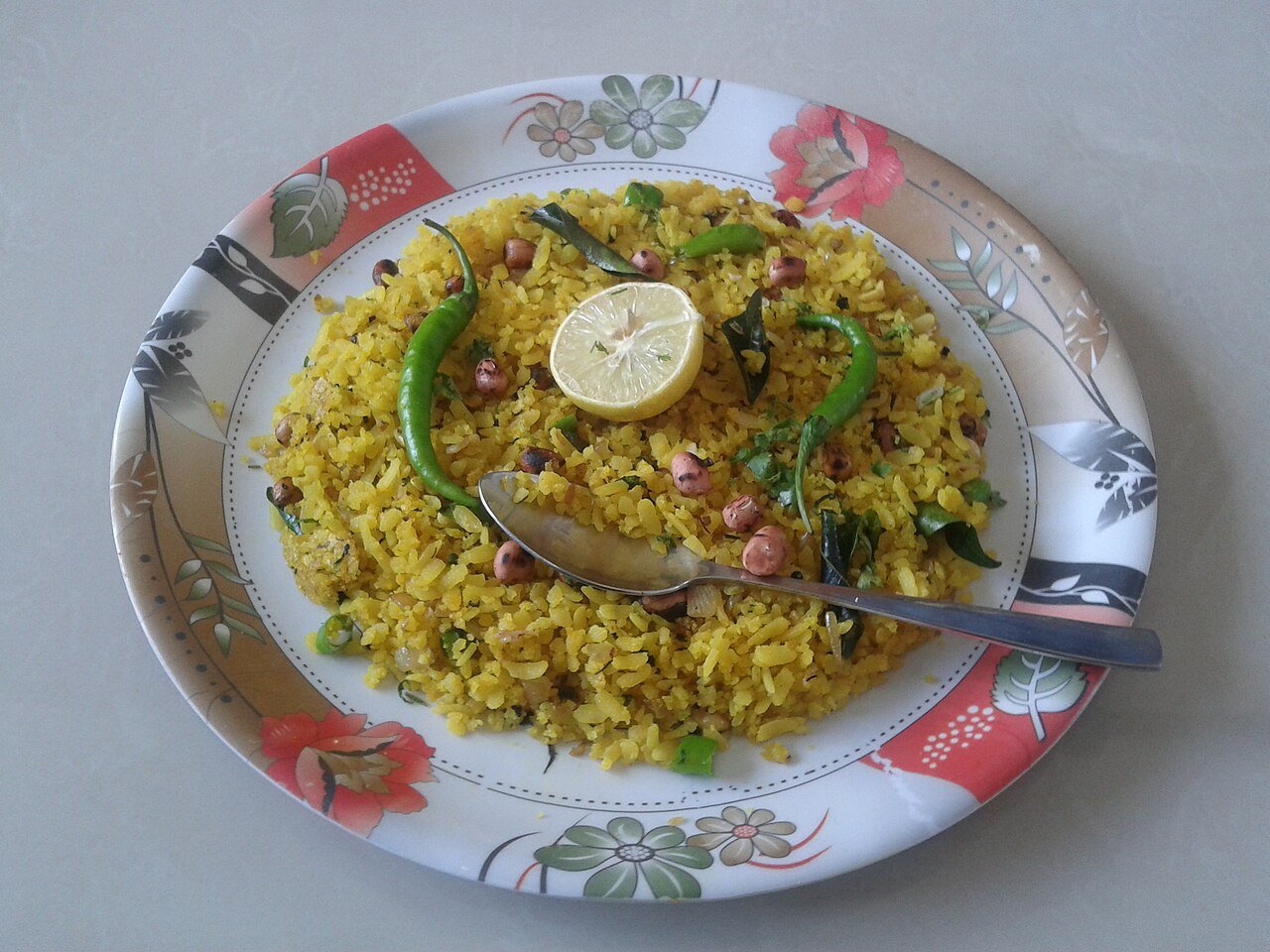
Check: The poha should be hot and soft, with separate flakes.
- Turn off the heat.
- Fold in 1 tbsp lemon juice, 2 tbsp chopped coriander and the fried peanuts.
- Serve promptly.
Tips
- Medium or thick poha suits this method; thin flakes can turn mushy.
Substitutions
- Use roasted cashews instead of peanuts.
Storage
- Cool in small shallow portions and refrigerate promptly, ideally within one hour. Use within 24 hours.
- Reheat rice only once, until steaming hot throughout. For this draft, check reheated food reaches 74°C / 165°F. Add a little water and cover while heating.
Make ahead
- Rinse poha just before cooking; chop onion one day ahead.
FAQ
Why are flakes mushy?
Thin poha or a long soak can become paste. Use thick flakes and drain after a brief rinse.
Can I skip peanuts?
Yes. They add crunch; the poha method stays the same.
How should I store kanda poha?
Cool in small shallow portions and refrigerate promptly, ideally within one hour. Use within 24 hours.
Recipe source and adaptation
Measured home adaptation: Swasthi's Recipes: Poha.
Kanda version; optional potato omitted.
Food safety references
FoodSafety.gov: cooking temperatures · Food Standards Agency: rice storage and reheating