Ingredients
Metric weights use grams. US weights use ounces; liquids use fluid ounces. Conversions are rounded. Spoon measures use 5 ml teaspoons and 15 ml tablespoons; cups use 240 ml.
Serves 4
Choose any positive whole number of servings. Ingredients and measured amounts in steps scale together. Times, temperatures and equipment stay unchanged. For larger yields, cook separate original-size batches. Counted ingredients can become fractions; beat eggs before dividing them. Fixed correction-water checks remain fixed.
Base
Stew
Finish
Equipment
Kitchen scales; measuring jug and spoons; knife; cutting board; mixing bowls; saucepan with lid; sieve; heavy frying pan; spatula; food thermometer; heatproof spoon; spatula.
Check all product labels and cross-contact. Diet groups describe this listed draft, not every substitution.
Steps
Brown · About 4 min
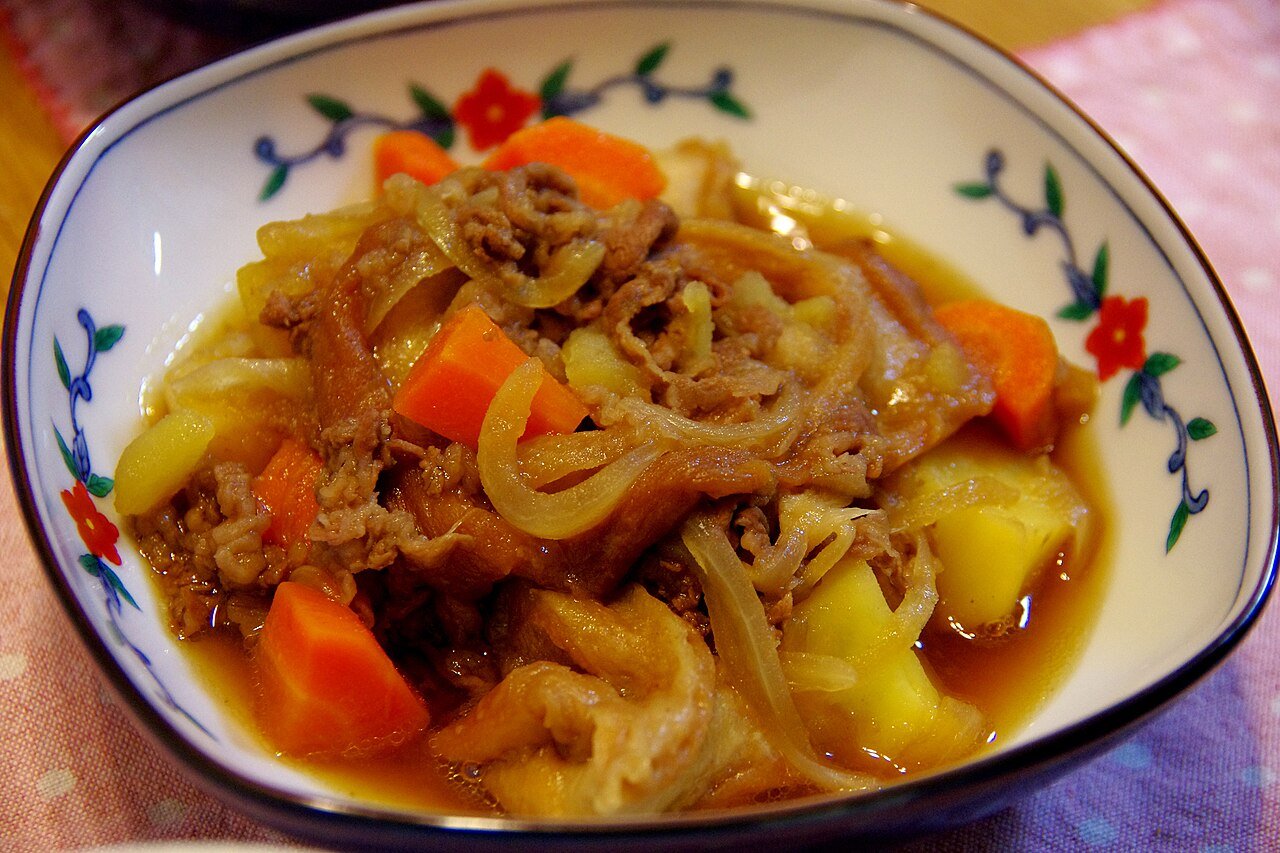
- Heat oil from 15 ml neutral oil, 350 g thinly sliced beef, 150 g onion, sliced; fry onion for 4 minutes, then beef for 2 minutes.
Simmer · About 25 min
- Add 600 g potatoes, cut into 3 cm pieces, 150 g carrots, sliced, 500 ml dashi, 45 ml soy sauce, 30 ml mirin, 15 g sugar. Bring to a simmer, cover loosely and cook gently for 25 minutes.
Finish · About 5 min
- Add 100 g green beans, trimmed; simmer 5 minutes until potatoes and beans are tender. Beef must reach at least 63°C / 145°F and rest 3 minutes.
Check: Look for this result: potatoes and beans are tender.
Tips
- Keep the simmer gentle so potatoes retain their shape.
- Use the texture and doneness checks in the method; cooking times depend on your pan and heat.
Substitutions
- Use thin pork shoulder instead of beef.
Storage
- Refrigerate perishable food within two hours, or within one hour in heat above 32°C / 90°F. Store covered at 4°C / 40°F or below. Use within two days for this draft.
- Reheat cooked dishes to 74°C / 165°F, stirring or turning for even heating. Serve cold salads, dips and chilled desserts directly from safe refrigeration.
- For sauces and soups, add a little water if thick and reheat gently. Crisp coatings soften after storage.
Make ahead
- Prepare the measured ingredients for Nikujaga one day ahead. Refrigerate chopped vegetables and other perishable ingredients separately; complete the staged cooking on the serving day.
FAQ
What matters most when making Nikujaga?
Keep the simmer gentle so potatoes retain their shape.
What can I substitute in Nikujaga?
Use thin pork shoulder instead of beef.
Can I prepare Nikujaga ahead?
Prepare the measured ingredients for Nikujaga one day ahead. Refrigerate chopped vegetables and other perishable ingredients separately; complete the staged cooking on the serving day.
Food safety references
FoodSafety.gov: cooking temperatures · Food Standards Agency: rice storage and reheating