Ingredients
Metric weights use grams. US weights use ounces; liquids use fluid ounces. Conversions are rounded. Spoon measures use 5 ml teaspoons and 15 ml tablespoons; cups use 240 ml.
Serves 4
Choose any positive whole number of servings. Ingredients and measured amounts in steps scale together. Times, temperatures and equipment stay unchanged. For larger yields, cook separate original-size batches. Counted ingredients can become fractions; beat eggs before dividing them. Fixed correction-water checks remain fixed.
Dough
Finish
Equipment
Bowl; rolling pin; flat pan; spatula; clean cloth.
Check all product labels and cross-contact. Diet groups describe this listed draft, not every substitution.
Steps
Mix and knead · About 8 min
- Mix 300 g whole-wheat atta, 200 ml water, ¼ tsp salt, adding the water gradually. Knead for 5–8 minutes.
Check: The dough is soft and smooth.
Rest · About 20 min
- Cover and rest for 20 minutes.
Roll · About 10 min
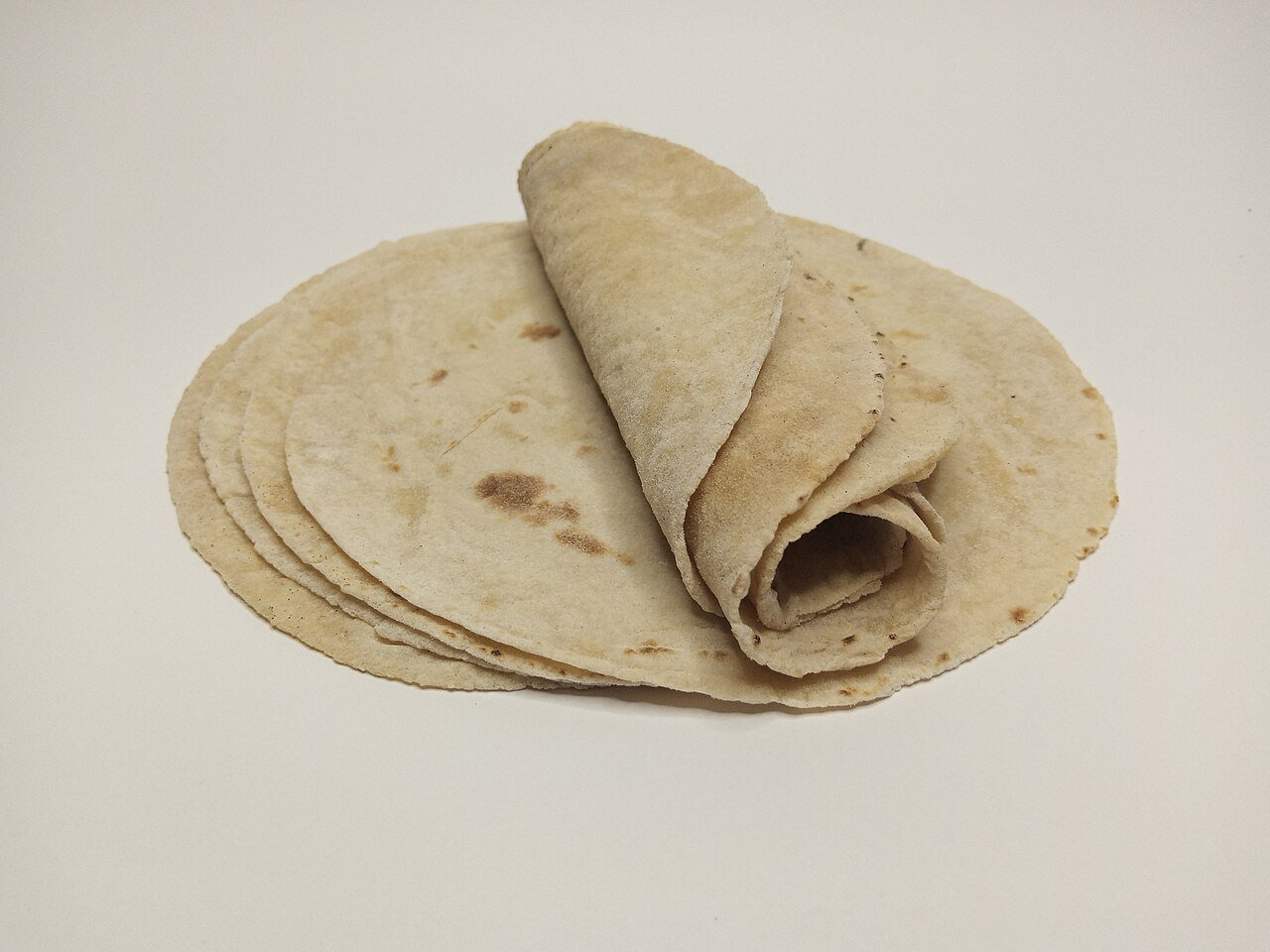
- Divide dough into 8 balls. Roll each to a thin 18 cm circle. Dust lightly with extra atta only as needed.
Cook · About 20 min
- Heat a dry flat pan over medium-high heat. Cook each roti for about 40 seconds, turn for 40 seconds, then turn and press edges gently until puffed. Brush with 15 g ghee.
Check: Both sides have brown spots and the dough is cooked.
Tips
- Use small amounts of dusting flour to keep rotis soft.
- Keep cooked rotis covered.
Substitutions
- Use oil instead of ghee or leave it out.
- Plain whole-wheat flour can replace atta; water needs may differ.
Storage
- Refrigerate perishable food within two hours, or within one hour in heat above 32°C / 90°F. Store covered at 4°C / 40°F or below. Use within two days for this draft.
- Reheat cooked dishes to 74°C / 165°F, stirring or turning for even heating. Serve cold salads, dips and chilled desserts directly from safe refrigeration.
Make ahead
- Make dough up to one day ahead; refrigerate covered.
- Cook rotis near serving time for the softest texture.
FAQ
Why do rotis not puff?
Uneven thickness or low pan heat can prevent puffing. They can still be cooked and edible.
Is an open flame necessary?
No. Gentle pressure in a hot pan can help puff the roti.
Why are they dry?
Too much dusting flour or long cooking can dry them.
Food safety references
FoodSafety.gov: cooking temperatures · Food Standards Agency: rice storage and reheating